Jammu, August 11, 2025:
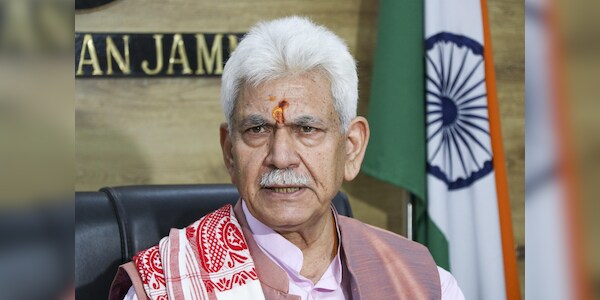
The Union Ministry of Home Affairs (MHA) has clarified before the Jammu and Kashmir High Court that the Lieutenant-Governor (LG) of Jammu and Kashmir holds exclusive statutory authority to nominate five members to the Union Territory’s Legislative Assembly without requiring the “aid and advice” of the elected government or the Council of Ministers.
This declaration came in response to a Public Interest Litigation (PIL) challenging the constitutional validity of the recent amendments to the Jammu and Kashmir Reorganisation Act, 2019, which empower the LG to nominate additional members beyond the elected strength of the Assembly.
Background of the Amendment and the PIL
In 2023, the Parliament amended the 2019 Act to allow the LG to nominate five members to the J&K Legislative Assembly. These include three members representing displaced Kashmiri migrants (two of whom must include a woman) and the Pakistan-occupied Jammu & Kashmir (PoJK) community, as well as two women members if the LG deems that women are inadequately represented.
The amendment increased the Assembly’s sanctioned strength from 114 to 119 seats, with 24 seats reserved and kept vacant for areas under PoJK administration.
Congress leader Ravinder Kumar Sharma filed the PIL questioning the constitutional validity of these nominations. The petitioner argued that such provisions could alter the government’s majority and potentially violate the basic structure of the Constitution.
Ministry’s Stand: LG’s Role is Independent and Statutory
In an affidavit submitted on July 24, 2025, the MHA emphasized that the office of the Lieutenant-Governor is a separate constitutional and statutory authority, distinct from the elected government of the Union Territory.
The affidavit states, “Once the Parliament bylaw recognises the Lieutenant-Governor as a distinct authority from the government of Union Territory under Parliamentary enactment, it necessarily follows that when a power is conferred upon the Lieutenant-Governor, then the same must be exercised as a statutory function and not as an extension of his duties as the head of the UT Government.”
It further clarifies that the nomination power granted to the LG under the amended provisions of the J&K Reorganisation Act is to be exercised in his discretion, without the “aid and advice” of the Council of Ministers.
The Ministry also highlighted that the total sanctioned strength of the Assembly includes the nominated members, not just the elected 114 seats. This interpretation aligns with the provisions of the Union Territories Act, 1963, applicable to other Union Territories such as Puducherry.
Government’s Argument on the PIL
The Ministry termed the petition as “academic” because the feared scenario, where nominated members could influence the formation or fall of the government, had not arisen so far.
The affidavit also noted that the petitioner failed to substantiate the claim that the nominations exceeded the sanctioned strength or violated constitutional provisions. The Ministry stated, “The Petitioner has not provided any cogent legal basis or statutory interpretation to support such a distinction, and the submissions in this regard remain misconceived and unsustainable in law.”
Court Proceedings and Political Context
The Jammu and Kashmir High Court had sought the Union government’s detailed response after hearing the PIL on October 21, 2024. The case is now scheduled for further hearing on August 14, 2025.
The election for the 90 seats in the J&K Assembly was held in September-October 2024, with the results declared on October 8. The National Conference-Congress alliance emerged with a strong majority, reshaping the political landscape of the Union Territory.
Significance of the Nominations
The nominated seats aim to ensure representation for displaced Kashmiri migrants, the PoJK community, and women — groups that otherwise may face underrepresentation in the Assembly.
The MHA’s stand underlines the constitutional design where the LG, as the constitutional head of the UT, holds certain independent powers to safeguard inclusivity and representation within the legislative framework.
Home Breaking News “MHA Defends LG’s Discretionary Nomination Rights in J&K Assembly Amid PIL Challenge”