New Delhi, November 30:
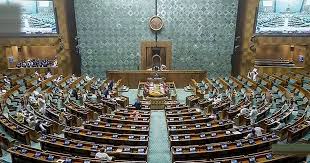
The Winter Session of Parliament, beginning Monday, is set to witness a renewed push for the government’s reform agenda, with a major focus on the civil nuclear sector, higher education restructuring, and consolidation of financial market regulations. The three-week session, comprising 15 sittings, comes immediately after the BJP-led NDA’s sweeping victory in the Bihar Assembly elections—an outcome expected to strengthen the government’s legislative momentum after the largely disrupted Monsoon Session.
At the centre of the government’s plan is The Atomic Energy Bill, 2025, a landmark legislation aimed at opening India’s civil nuclear sector to private participation and establishing an updated regulatory framework for the use of atomic energy. Alongside this, the government is preparing to introduce nine additional draft legislations, including the Higher Education Commission of India Bill, which seeks to replace existing bodies with a single overarching commission, enabling greater autonomy for universities and promoting quality through a transparent accreditation mechanism.
Other important bills slated for introduction include:
* National Highways (Amendment) Bill — enabling faster, more transparent land acquisition for highway development.
* Corporate Laws (Amendment) Bill, 2025 — proposing changes to the Companies Act, 2013, and LLP Act, 2008, to ease compliance and improve business operations.
* Securities Markets Code (SMC) Bill, 2025 — consolidating SEBI Act, Depositories Act, and the Securities Contracts Regulation Act into a comprehensive unified code.
* Proposed amendments to the Arbitration and Conciliation Act, which have been referred to a committee following Supreme Court observations.
However, the government recently withdrew plans to introduce a bill giving the President direct regulatory authority over the Union Territory of Chandigarh following strong political opposition.
Meanwhile, the opposition is gearing up to corner the government over the Special Intensive Revision (SIR) of electoral rolls across 12 states and UTs, and is also expected to flag concerns over rising air pollution in the national capital.
Parliamentary Affairs Minister Kiren Rijiju has convened an all-party meeting on Sunday to ensure smoother coordination during the session, which concludes on December 19.