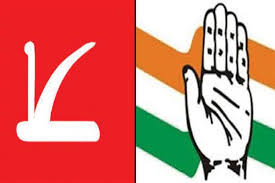
Srinagar, October 13: Last-minute efforts to forge unity between the National Conference (NC) and Congress for the upcoming Rajya Sabha elections have failed, sources said, due to disagreements over the voting preferences of independent MLAs. These MLAs are not required to disclose their votes to authorized polling agents during the election, raising concerns about cross-voting.
Discussions between the two alliance partners reportedly continued late into the night after Congress publicly declined on Sunday to contest the “riskier” fourth seat offered by the NC. According to sources familiar with the negotiations, Congress had expressed willingness to field a candidate on the condition that five NC MLAs would vote for its nominee instead of relying on five independents currently supporting the ruling alliance.
A senior Congress leader told news agency Kashmir News Observer (KNO), “We made it clear to the NC command that we cannot depend on independents to vote for our candidate. We requested that they spare five of their MLAs for us, and in return, ask the independents to vote for the NC candidate contesting under the third notification, which involves a combined election.”
However, the NC leadership reportedly did not accept this proposal. The Congress leader explained, “Independent MLAs are not bound to show their marked ballots to anyone, and if they do, their votes risk being cancelled. In contrast, NC MLAs, being party-affiliated, must display their votes to authorized polling agents.”
Among the 53 MLAs supporting the ruling alliance, five are independents: Satish Sharma (Chamb), Pyare Lal (Inderwal), Dr. Rameshwar Singh (Bani), Muzaffar Khan (Rajouri), and Choudhary Akram (Surankote). Election rules allow these independents to keep their votes confidential, unlike party-affiliated legislators.
The conditions for independent voting raised concerns within Congress about potential cross-voting. “How can we rely on independents when we are not in power and merely providing outside support?” a Congress leader asked.
The NC leadership, sources added, suggested that Congress should also seek the support of the Peoples Democratic Party (PDP), which has three MLAs in the House, further complicating the negotiations.
The deadlock highlights the challenges of alliance politics in Jammu and Kashmir ahead of crucial Rajya Sabha elections, where the final outcomes depend not only on party strength but also on strategic voting decisions by independents and smaller parties.