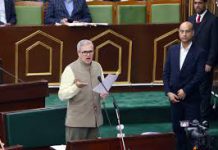
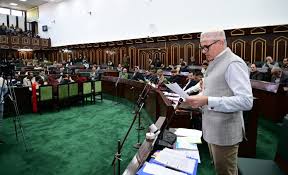
Jammu, Feb 10: Chief Minister Omar Abdullah on Tuesday clarified in the Jammu and Kashmir Legislative Assembly that the elected Council of Ministers had no role in approving the proposed ropeway project for the Shri Mata Vaishno Devi shrine, putting to rest claims made during a heated debate in the House.
Addressing legislators, the Chief Minister said he personally verified official records after assertions were made that the cabinet had granted approval for the project. “After checking all relevant files, it is clear that the cabinet did not approve the ropeway project. It was also not a decision taken by the Administrative Council,” Omar Abdullah said.
He informed the Assembly that the project was approved by the Lieutenant Governor in September 2024, a period when the elected government had not yet been formed in the Union Territory. The Chief Minister stressed that attributing the decision to the present government was factually incorrect and misleading.
Omar Abdullah said inaccurate statements had created unnecessary confusion both inside the Assembly and among the general public, especially given the sensitivity of the issue involving faith, livelihood and local concerns in the Katra region.
Referring to developments in the House a day earlier, the Chief Minister said that emotions had overshadowed facts during the debate. He noted that one member had even spoken about resigning from the Assembly if it was established that the cabinet had not approved the project.
“The House and the people must be informed on the basis of facts, not assumptions,” Omar Abdullah said, underlining the need for transparency and responsible statements on matters of public importance.
The clarification comes amid protests by sections of local residents, traders and service providers who fear the ropeway project could affect traditional livelihoods linked to the pilgrimage.
The Chief Minister reiterated that his government would always place public interest and factual clarity above political posturing, particularly on issues carrying social and religious significance.