
- Uri, Poonch to Get Emergency Hospitals; Health Sector Upgraded Across J&K
- Bullet-Proof Ambulances, Trauma Hospitals Announced for Border Belt
Srinagar: Jammu Zahoor Lolabi/ Idress falahi
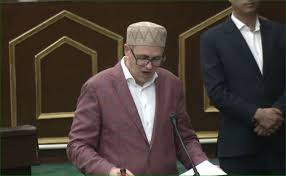
Chief Minister and Finance Minister Omar Abdullah on Tuesday announced a major expansion of healthcare infrastructure across Jammu and Kashmir, declaring the health sector a top priority, with special focus on border areas, emergency services, maternal health, cardiac care and cancer management.
Presenting the Budget in the Legislative Assembly, the Chief Minister said special funding will be provided to upgrade healthcare facilities, particularly in vulnerable border belts and underserved regions, to ensure timely, accessible and quality medical care for the people of Jammu and Kashmir.
A key announcement was made for women and child health with the commissioning of the extension block of Lal Ded Hospital, Srinagar, in 2026–27. The project, being executed at a cost of ₹118 crore, will add 108 additional beds, significantly enhance gynaecology and obstetrics services, and include a Neonatal Intensive Care Unit (NICU).
In a major step towards advanced reproductive healthcare, the government also announced the introduction of an IVF facility at Lal Ded Hospital.
Further strengthening maternal and paediatric care, the Chief Minister said that construction of a 249-bedded Mother and Child Care Hospital at Government Medical College (GMC) Anantnag will be initiated during 2026–27, providing critical services to South Kashmir.
To strengthen emergency response systems, the government announced the establishment of full-fledged Emergency Medicine Departments in all Government Medical Colleges over the next two financial years. The move aims to improve trauma care, rapid emergency response and survival outcomes for accident victims and critically ill patients.
In a significant initiative for border regions, the Chief Minister proposed the establishment of two dedicated Emergency and Accident Hospitals at Uri and Poonch. These hospitals will provide 24×7 trauma care, emergency surgeries and critical medical services, addressing healthcare needs in areas prone to shelling, cross-border incidents and natural disasters.
To further enhance emergency preparedness, the government also proposed the purchase of bullet-proof ambulances, starting with two ambulances for Poonch and Tangdhar in the next financial year.
Cardiology services will see major expansion with the inauguration of two new Cath Labs at GMC Anantnag and GMC Jammu.
Under the PM-ABHIM scheme, 17 Critical Care Blocks—including two 100-bedded and twelve 50-bedded units—are currently under construction across the Union Territory.
Additionally, the Chief Minister announced the establishment of Cath Labs at GMC Rajouri and GMC Baramulla during 2026–27, at a total cost of ₹30 crore, along with a Cath Lab at GMC Doda to cater to the Chenab Valley.
Expressing concern over the rising incidence of cancer, the government announced a Cancer Control Strategy for Jammu and Kashmir in collaboration with NITI Aayog and ICMR. The strategy will focus on prevention, early detection and improved treatment, with support from national institutions such as the Tata Memorial Centre.
A population-based cancer registry will also be established to improve monitoring and management of cancer cases.
To reduce the referral burden on tertiary hospitals, the government will implement a time-bound action plan to upgrade peripheral medical colleges, based on recommendations of a high-level committee, ensuring specialised healthcare reaches people closer to their homes.
Overall, the Budget announcements signal a strong push towards strengthening public healthcare, with special emphasis on border belts, emergency preparedness and equitable access to advanced medical services across Jammu and Kashmir.