
News Desk / 29/ jan/2026 Ishfaq Gowher
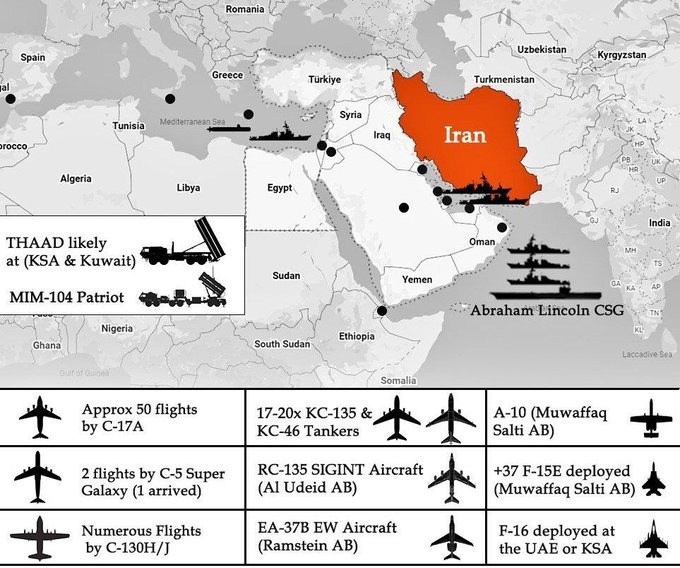
Tensions in the Middle East have entered a critical phase as American forces complete a major military buildup in and around the Gulf region, close to Iran’s borders. The scale, speed, and nature of these deployments have triggered intense global debate, with many analysts warning that the region is now closer to open conflict than at any point in recent years.
The United States has positioned significant naval and air assets in strategic locations, including aircraft carrier strike groups, advanced fighter jets, missile defense systems, and additional troops. Officially, Washington maintains that these moves are defensive in nature, aimed at protecting U.S. interests and allies while deterring any hostile action by Iran or its regional partners. However, the timing and concentration of forces suggest preparation for multiple scenarios — including direct military engagement.
For Iran, the buildup is being viewed as a clear pressure tactic. Tehran has repeatedly stated that it will not negotiate under threat and has warned that any attack on its territory will be met with a “decisive and proportionate response.” Iranian officials have also hinted that U.S. bases and allied assets across the region could become targets if hostilities begin, raising fears of a wider regional confrontation.
Security experts note that large-scale military deployments of this nature are rarely symbolic alone. While diplomacy remains officially “on the table,” the completion of operational readiness significantly reduces reaction time, meaning decisions — if taken — could translate into action very quickly. This has placed regional capitals, global markets, and international diplomatic circles on high alert.
The potential consequences of a military clash are profound. Beyond the immediate risk of loss of life and infrastructure damage, any conflict involving Iran could disrupt global energy supplies, escalate proxy conflicts across West Asia, and draw in multiple international actors. The ripple effects would not be limited to the Middle East but felt across Europe, Asia, and beyond.
As the world watches closely, the coming days and weeks will be crucial. Whether this show of force leads to renewed diplomacy or slides into confrontation remains uncertain. What is clear, however, is that the strategic buildup has dramatically raised the stakes, leaving the region standing at a dangerous crossroads between deterrence and war.