
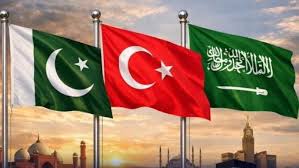
News Desk | January 15, 2026
Islamabad, Riyadh, and Ankara are reportedly working on a trilateral defense framework, marking a significant potential shift in regional military alignments, according to sources familiar with the talks. The proposed agreement, currently in draft form, has been under discussion for nearly 10 months, Pakistan’s Minister for Defense Production, Raza Hayat Harraj, told Reuters.
Harraj clarified that this trilateral initiative is distinct from the bilateral Pakistan–Saudi Arabia defense pact signed last September, which commits both nations to mutual support in case of external aggression. “The Pakistan–Saudi Arabia–Turkey trilateral agreement is already in the pipeline,” he said, noting that identical draft texts have been circulated among Islamabad, Riyadh, and Ankara.
While officials have framed the move as a defensive arrangement, the timing highlights broader regional anxieties. Escalating Israeli military operations in West Asia, including recent strikes in Qatar, have prompted several regional powers to reconsider their security strategies, particularly amid concerns over the reliability of Western-led security guarantees.
Speaking from Istanbul, Turkish Foreign Minister Hakan Fidan emphasized that discussions are ongoing, with no final agreement yet in place. “There are talks underway, but no deal has been signed,” he said, underscoring Ankara’s preference for a broader regional security platform rather than a narrowly focused alliance.
The trilateral draft reflects the deepening military cooperation among Pakistan, Saudi Arabia, and Turkey. Pakistan’s historical defense ties with both Riyadh and Ankara, combined with Saudi financial resources and Turkey’s growing defense capabilities, make the framework attractive to all three parties.
From an Indian perspective, such developments in West Asia are being watched closely. While the draft agreement appears defensive, any new security arrangement that strengthens Pakistan’s regional military partnerships could have implications for South Asian security dynamics. Analysts note that India’s focus remains on maintaining strategic stability and monitoring evolving alliances that may influence regional conflicts or extremist networks.
Negotiations on the trilateral pact continue behind closed doors, with all parties emphasizing that consensus will be required before the agreement can be formally adopted.