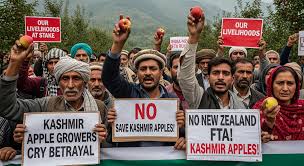
Srinagar , Dec 29 : Apple farmers across Kashmir have voiced strong concern over India’s decision to reduce import duty on apples from New Zealand to 25 percent under the India–New Zealand Free Trade Agreement, warning that the move could hurt local prices and threaten livelihoods.
Growers say anxiety has grown as cold storage facilities in the Valley are set to open. With a large quantity of Kashmiri apples stored and awaiting release, farmers fear that cheaper imported apples entering the market at this stage could sharply depress prices.
“Every year, a new challenge confronts Kashmir’s apple industry,” said Bashir Ahmad Basheer, President of the Kashmir Valley Fruit Growers Cum Dealers Union. “At times apples are imported from Iran, sometimes from the US and other countries, and now New Zealand has been added. All this puts continuous pressure on our local growers.”
He said the cumulative impact of such imports has been particularly damaging for small and marginal farmers, who are already struggling with rising input costs, unpredictable weather, pest attacks and transportation issues.
“The reduction in customs duty will make imported apples cheaper, and traders tend to prefer them. This directly affects the pricing of our apples in the domestic market,” Basheer added.
Farmers said most of the Valley’s apple produce is currently in cold storage. “When cold stores open, we expect reasonable prices to recover our costs. If imported apples flood the markets, our produce will either be sidelined or sold at distress rates,” said an apple grower from Shopian, known as the apple bowl of Kashmir.
Another grower from Sopore pointed out that the apple sector sustains lakhs of people in the Valley. “Orchardists, labourers, traders, transporters and many others depend on this economy. Any policy decision that affects apple prices impacts the entire region,” he said.
Growers have urged the central government to adopt a more balanced approach while entering into international trade agreements and to ensure that assurances given to protect domestic apple producers are honoured.