Srinagar 10 Dec 2025 / Ishfaq Gowher
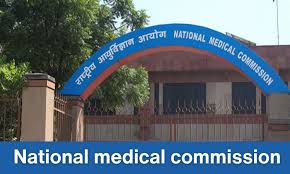
The National Medical Commission (NMC) has issued a stark and urgent warning to medical colleges across India, and the situation in Jammu & Kashmir is among the most alarming. The Commission’s latest department-wise assessment under the Minimum Standard Requirements (MSR 2023) has revealed major gaps in faculty strength, raising serious concerns about academic standards and the future of MBBS seats in the Union Territory.
As per NMC norms, a 150-seat MBBS college must maintain 226 full-time teaching personnel—including professors, associate professors, assistant professors, senior residents, and tutors. J&K currently has six colleges functioning under this category, including GMC Srinagar, GMC Jammu, GMC Baramulla, GMC Kathua, GMC Doda, and ASCOMS Jammu.
For institutions upgraded to 200 MBBS seats—notably GMC Srinagar and GMC Jammu—the bar is even higher. The NMC mandates 20 professors, 51 associate professors, 70 assistant professors, and 73 senior residents across 23 departments. General Medicine alone requires a full complement of senior faculty.
Despite this, the ground reality remains dismal. GMC Srinagar faces 175 faculty vacancies, severely impacting both teaching and patient care. SKIMS Medical College reports a 60% shortfall, while newly established colleges such as GMC Handwara, GMC Doda, and GMC Rajouri are grappling with over 100 vacant positions each. Many of these institutions are forced to rely on contractual hires or internal adjustments merely to keep departments functional.
Recruitment processes remain slow and inconsistent. Several crucial posts have not been referred to recruiting bodies, and many advertisements are still pending finalisation. Recent NMC inspections have flagged multiple colleges in J&K for having less than half of the required professor-level faculty in critical departments — a violation that could jeopardize annual renewals and jeopardize MBBS seat permissions.
In Parliament, Union Health Minister JP Nadda said that the NMC has strengthened its regulatory framework through MSR 2023 and the Medical Institutions (Qualification of Faculty) Regulations 2025. These rules mandate that all faculty must be full-time, prohibit private practice during duty hours, and allow visiting faculty only for supplementary undergraduate teaching.
With J&K’s medical colleges racing against time to fill vacant positions, the NMC’s findings underscore a pressing reality: without immediate reforms and targeted recruitment, the region’s expanding medical education network risks serious disruption, impacting thousands of students and critical public health services.