Omar Abdullah Details a Year of Unprecedented Security Challenges
Jammu / 06 December Ishfaq Gowher : Jammu and Kashmir Chief Minister Omar Abdullah has said that his first year in office has been “difficult by any yardstick,” shaped by an extraordinary combination of security shocks, economic strain, and social anxieties. Speaking at a function, Abdullah offered a candid reflection on the challenges that have defined his tenure so far, noting that the events of the past twelve months have tested the resilience of both governance and society across the Union Territory.
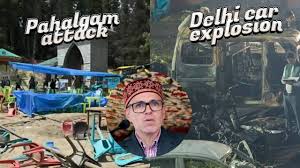
Reviewing the year’s major incidents, the Chief Minister pointed to the attack in Baisaran, the Phalgham violence, and the recent blast in Delhi, which investigators believe stemmed from “a conspiracy hatched in Jammu and Kashmir.” These events, he said, have not only heightened the security alert but have also had a profound psychological impact on people, who are still struggling to understand the recurring cycles of violence.
“From a security paradigm, it has been a difficult year,” he remarked. “You began with Baisaran and ended with Delhi.”
Abdullah explained that the immediate aftermath of the Baisaran attack dramatically shifted the region’s economic trajectory. Jammu and Kashmir, he said, has always been economically fragile due to structural limitations, over-dependence on tourism, and restricted manufacturing potential. The sudden surge in fear and uncertainty, combined with national-level travel disruptions and airline chaos, has led to a steep decline in tourist inflow, affecting livelihoods across transport, trade, hospitality, and small businesses.
“The circumstances after Baisaran completely reoriented our economy,” he said. “We were never a very strong economy in the first place, and incidents of this nature make recovery even more difficult.”
Responding to questions about public sentiment, Abdullah rejected the suggestion that Kashmiris may have become more tolerant of violence. He said the people of Jammu and Kashmir were deeply disturbed by both the Phalgham and Delhi incidents, even if their reactions are not always vocal. He recalled how the Valley witnessed rare scenes of collective condemnation after Phalgham, with ordinary citizens, students, and civil society expressing grief and outrage. A special Assembly session held soon after saw lawmakers across parties take a unified stand against terrorism.
“That feeling of unity still exists,” he insisted. “It may not always be visible, but it still exists.”
However, the Chief Minister expressed serious concern over measures taken outside the Union Territory that, in his view, unfairly target Kashmiris in the aftermath of terror incidents. Referring to a recent order issued in Haryana, which directed foreign nationals and Kashmiri Muslims to register at local police stations, Abdullah said such directives deliver a damaging message and reinforce harmful stereotypes.
“You are effectively saying Kashmiri Muslims and foreigners are the same,” he said. “Is that really the message you want to send?”
He confirmed that his administration took up the matter with the concerned state authorities, but added that “the damage was already done.” Orders like these, he said, create long-lasting mistrust and make ordinary Kashmiris — especially students and workers outside the Valley — feel vulnerable and singled out.
Abdullah concluded by urging political leaders across the country to refrain from actions that stigmatize communities. He said the overwhelming majority of Kashmiris are peaceful citizens pursuing education, employment, and stability, and they should not be burdened with the consequences of acts committed by a tiny minority.
“Not all Kashmiri Muslims are terrorists. Not all support terrorism. Only a minuscule minority does,” he reiterated.
He called for a more sensitive, inclusive, and responsible national discourse that helps rebuild trust rather than deepen divides.