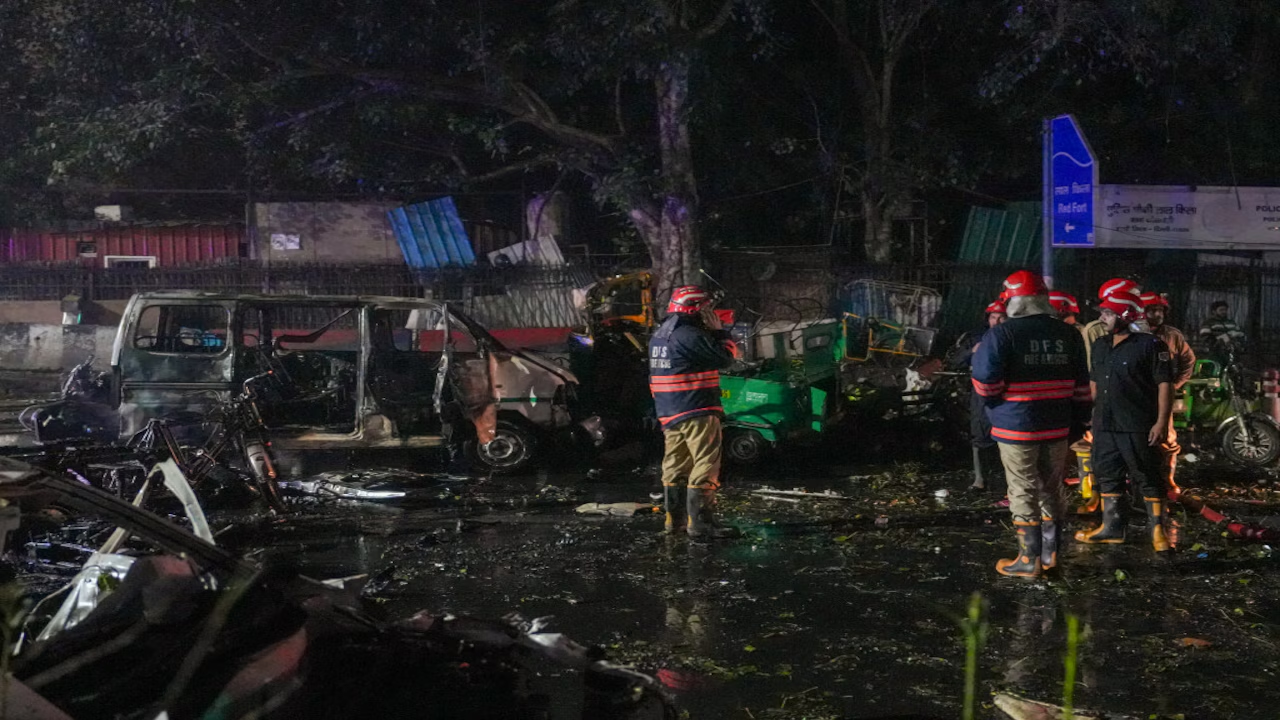
New Delhi: Indian security agencies investigating the November 10 Red Fort blast are increasingly focusing on a suspected cross-border network involving Lashkar-e-Taiba operatives and radical elements based in Bangladesh. This comes even as Bangladesh’s interim government, led by Muhammad Yunus, firmly denies that its territory was used for the conspiracy.
According to officials familiar with the probe, digital intelligence and communication intercepts have pointed to an online meeting allegedly held in Dhaka days before the blast. The meeting reportedly included Lashkar commander Saifullah Saif, members of the Ansarullah Bangla Team (ABT), and a few local facilitators. Investigators suspect that operational instructions for targeting high-security locations in India may have been discussed during this interaction.
The latest arrests by the Delhi Police Special Cell — including two Haryana-based doctors linked to Al-Falah University — have further widened the scope of inquiry. Their role is being examined for possible coordination and logistical support.
In a parallel development, the NIA recently detained a Bangladeshi national from Murshidabad, believed to be associated with ABT. Agencies suspect parts of the module may have moved through the Bangladesh–West Bengal corridor before reaching Delhi.
While Dhaka has condemned the blast and dismissed reports of its involvement, Indian officials maintain that evidence gathered so far warrants deeper investigation, particularly into the activities of LeT-linked handlers operating from abroad.
The probe continues, with agencies piecing together interstate and international footprints behind the attack — now viewed as part of a larger effort to destabilise India through coordinated terror modules.