ISHFAQ GOWHAR
SRINAGAR: The recent Rajya Sabha elections in Jammu and Kashmir have once again proved that in the region’s politics, nothing is impossible. While the National Conference (NC) was expected to secure three seats comfortably, the victory of BJP president Sat Sharma on the fourth seat has taken political observers by surprise.
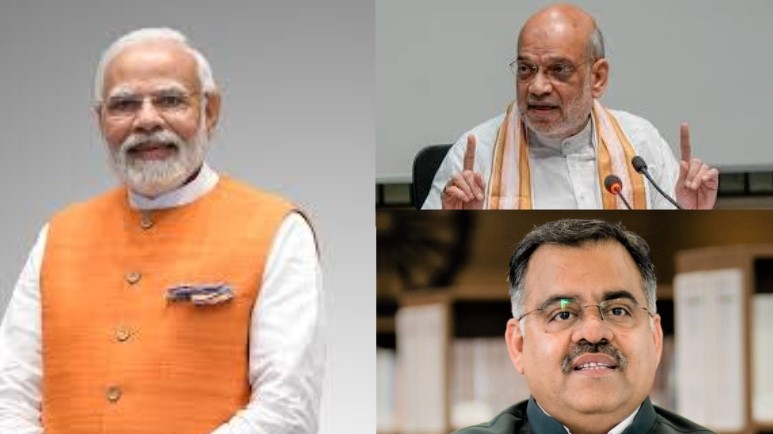
With the BJP needing just one extra vote to ensure a win, the addition of four unexpected votes not only defied all projections but also exposed fissures within the opposition alliance. Analysts believe this victory is less about Sat Sharma or the local BJP unit and more about the meticulously crafted central strategy executed under the leadership of Prime Minister Narendra Modi and Home Minister Amit Shah.
Party General Secretary Tarun Chugh is being credited with translating this central strategy into on-ground success in J&K. His active involvement, coordination, and behind-the-scenes maneuvering are seen as key factors in delivering the BJP’s surprise win.
The four additional votes have sparked speculation about dissent within the opposition camp comprising NC, Congress, PDP, and CPI(M). The loss of one seat, despite claims of unanimous support, has raised serious questions about the cohesion and trust within the alliance.
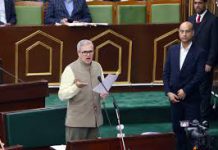
For the National Conference, the result is more than just a numerical setback—it’s a political jolt. Experts view this as a warning signal for Omar Abdullah’s leadership, suggesting that without strengthening internal discipline and alliance management, future electoral battles may prove even tougher.
Conversely, the BJP’s success has sent a strong message. It demonstrates that the party’s organizational network, strategic clarity, and campaign precision are now effectively operating in Jammu and Kashmir’s complex political terrain.
The implications of these Rajya Sabha results go beyond the four seats. Their impact will likely resonate in the upcoming by-elections and the much-anticipated Assembly polls. The BJP’s approach has made it clear that it no longer aims for a symbolic presence in the Valley—but a substantive political footprint.
For the opposition—NC, PDP, and Congress—this outcome is a reality check. Without unity, strategy, and mutual confidence, their political challenges in the coming months could deepen.
Ultimately, this Rajya Sabha contest has underscored a defining shift in J&K politics: a transition into a new era where discipline, planning, and tactical mastery—not legacy—determine success. The BJP’s unexpected victory isn’t just a seat gained—it’s the beginning of a new political equation in Jammu and Kashmir.