
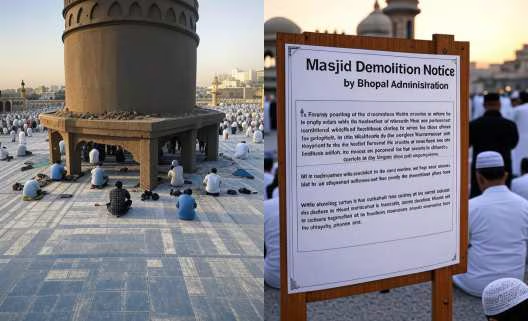
Bhopal is witnessing growing tension after the district administration issued demolition notices to two mosques located near the city’s historic Bade Talab. The Dilkash Mosque and the Bhadbhada Mosque have been declared “illegal structures” by the administration, which maintains that they were constructed on encroached land within the designated “No Development Zone.”
The notices were served as part of a larger anti-encroachment drive targeting nearly 35 structures, including temples and shrines, built along the periphery of the lake. Officials argue that these constructions pose a threat to the water body and violate environmental norms.
The Madhya Pradesh Waqf Board has strongly opposed the order, claiming that both mosques are registered Waqf properties with historical records dating back to 1937. The Board approached the High Court after the National Green Tribunal (NGT) declined to intervene. In its petition, the Board argued that the administration’s decision undermines constitutional protections of religious properties and amounts to targeting a particular community.
Local Muslim organisations have warned of strong protests if the demolition goes ahead, stating that the mosques have been places of worship for decades. On the other hand, Hindu groups have demanded immediate action, calling the structures illegal encroachments on public land.
The controversy has also sparked political reactions, with opposition leaders accusing the government of selectively targeting religious institutions, while ruling party representatives maintain that the drive is aimed at protecting the city’s ecological balance.
For now, the fate of the two mosques lies with the Madhya Pradesh High Court, which is expected to hear the matter in the coming days. The administration has indicated that no demolition will be carried out until the legal process is complete.