
Kishtwar, J&K | August 16:
Ishfaq Gowher
Jammu and Kashmir Chief Minister Omar Abdullah on Saturday announced ex-gratia relief for the victims of the devastating cloudburst that struck the Chositi area of Kishtwar district. At least 22 people have lost their lives while dozens sustained injuries in the tragedy, which has left the region in shock.
The Chief Minister, who rushed to Kishtwar to personally assess the situation, declared a relief package for the affected families. As per the official announcement, ₹2 lakh each will be given to the next of kin of those who died, ₹1 lakh to those who sustained serious injuries, and ₹50,000 to those with minor injuries.
Abdullah also directed the district administration and rescue agencies to intensify relief and rehabilitation operations on a war footing. “No stone should be left unturned in ensuring that every affected family receives timely assistance and proper care,” he said while chairing a high-level meeting of officers in Kishtwar.
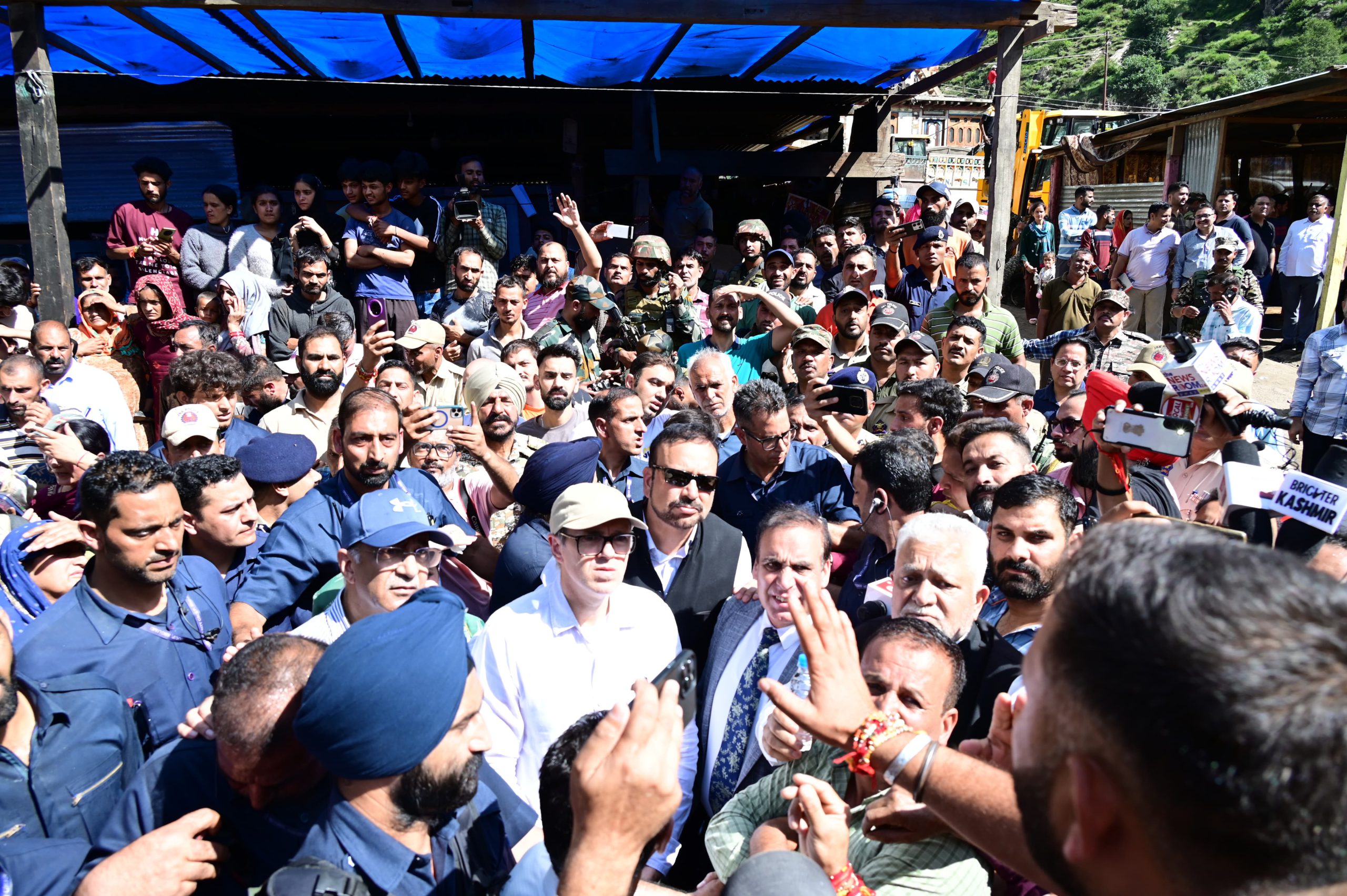
Omar Abdullah visited the cloudburst-hit site along with senior officers of the civil and police administration. He inspected the damage caused to residential houses, agricultural land, and public infrastructure, and interacted with locals who narrated their ordeal.
The Chief Minister expressed deep grief over the loss of lives and assured the victims’ families that the government stands shoulder-to-shoulder with them in this hour of tragedy. He also reviewed the arrangements being made for temporary shelter, food, drinking water, and medical facilities for the survivors.
While addressing officials, the Chief Minister directed that priority should be given to restoring road connectivity and communication lines, which have been badly damaged due to flash floods triggered by the cloudburst. He stressed immediate deployment of adequate machinery for clearing debris and ensuring that relief reaches even the remotest hamlets.
Special focus has also been laid on restoring power and water supply, besides setting up emergency medical camps in the affected areas. Abdullah asked health officials to remain stationed in Kishtwar until the situation normalizes.
Rescue teams from the State Disaster Response Force (SDRF), police, and district administration have been pressed into service. The Army and paramilitary forces are also assisting in evacuation and relief efforts, given the difficult terrain of Kishtwar. Helicopters have been kept on standby to airlift critically injured victims to Jammu for advanced treatment.
Local volunteers and community groups have also stepped forward, extending help in clearing debris and distributing food and water among affected families.
The scene in Kishtwar remains grim, with families mourning their loved ones and searching for missing members. Many houses and shops have been completely washed away, while agricultural land has suffered extensive damage. Villagers expressed fear of more such calamities in the hilly terrain, urging the government to strengthen disaster-preparedness mechanisms.
During his visit, Omar Abdullah acknowledged the need for long-term strategies to deal with natural calamities in hilly districts like Kishtwar, Doda, and Ramban. He assured that the government would explore scientific mapping of vulnerable areas, construction of protective bunds, and better disaster-management infrastructure.
“We cannot stop natural disasters, but we can certainly minimize their impact through preparedness, planning, and strong infrastructure,” Abdullah said.
Political leaders, social activists, and religious organizations across Jammu and Kashmir have expressed solidarity with the victims. Many have also called for a special compensation package for rehabilitation and demanded that the government declare Kishtwar a disaster-hit district to ensure continuous financial and logistical support.
The administration has set up relief camps, and immediate rehabilitation of affected families is being coordinated. Authorities have appealed to the public to stay away from vulnerable areas and cooperate with officials engaged in rescue operations.
The tragedy has once again highlighted the fragile ecological balance in mountainous areas of Jammu and Kashmir, where erratic weather events such as cloudbursts and flash floods are becoming increasingly frequent.
As rescue teams continue their work and the administration prepares to rebuild, the people of Kishtwar are left grappling with the scars of a calamity that struck without warning but united the community in grief and resilience.