
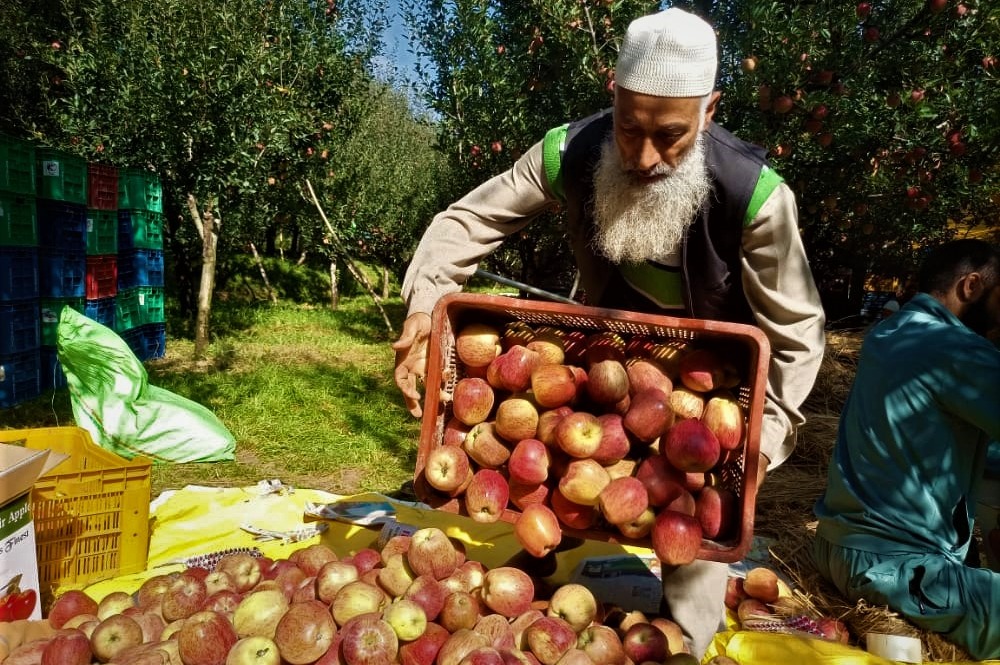
Kulgam, Aug 13: Apple growers in south Kashmir’s Kulgam district staged a protest on Wednesday, calling upon Prime Minister Narendra Modi to “act boldly” and impose import duties on U.S. apples, which they say are flooding Indian markets and hurting the local horticulture economy.
Gathered in the district’s main fruit mandi, dozens of orchardists and traders raised slogans against the government’s “indifference” towards the plight of Kashmir’s apple industry. They said the unchecked import of foreign apples—especially from the United States—is causing severe losses to local growers, who are already grappling with high input costs, rising transportation charges, and adverse weather conditions.
“Cheap U.S. apples are capturing our markets. If the government does not step in, our decades-old horticulture industry will collapse,” said one protesting farmer. “We urge PM Modi to be brave and put a heavy tax on these imports to protect domestic farmers.”
The protesters also expressed strong resentment over what they termed “anti-farmer” policies, including repeated hikes in electricity tariffs. They demanded the immediate rollback of these hikes, saying higher power bills are adding to the financial burden on orchardists who rely on irrigation and cold storage facilities.
Another major demand raised during the protest was the grant of amnesty on Kisan Credit Card (KCC) loans. Farmers said that many orchardists are unable to repay their loans due to declining profits and successive crop damages caused by untimely rains and hailstorms.
“We are not asking for freebies; we are asking for survival,” said another protester. “If the government can waive corporate loans, it should also provide relief to struggling farmers in Kashmir.”
The protesters warned of intensifying their agitation if their demands are not met. They called for a coordinated response from fruit growers across the Valley to press for the imposition of import duties, rollback of power tariff hikes, and amnesty on KCC loans.
Kashmir’s horticulture sector, which employs hundreds of thousands and contributes significantly to the region’s economy, has been under stress in recent years due to climate challenges, competition from imported produce, and rising operational costs.