New Delhi /26 Jan/2026 Gulistan News desk
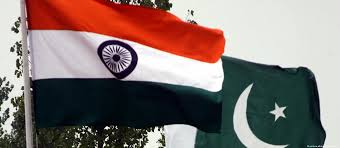
Few Indians today would imagine Pakistan occupying the seat of honour at India’s Republic Day parade. Yet history records two moments when exactly that happened — in 1955 and again in 1965 — during a brief phase when symbolism was trusted more than strategy, and hope outweighed hard experience.
These invitations were extended not in times of peace, but amid deep suspicion, unresolved borders, and the fresh scars of Partition. They remain among the boldest — and most controversial — diplomatic gestures India has ever made towards its western neighbour.
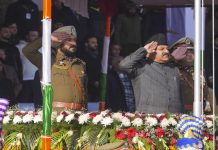
In January 1955, as India prepared to showcase its military strength and republican identity, the Republic Day parade moved to Rajpath for the first time. Watching the spectacle from the saluting dais was Sir Malik Ghulam Muhammad, Pakistan’s Governor-General — a sight that would be unthinkable today.
Prime Minister Jawaharlal Nehru believed that public gestures could calm private animosities. Inviting Pakistan’s top constitutional head was meant to signal that India, despite the bitterness of the Kashmir conflict and the 1947–48 war, was willing to engage.
Ironically, Ghulam Muhammad would later be remembered in Pakistan for undermining democratic institutions by dismissing elected governments and dissolving the Constituent Assembly — moves that entrenched executive dominance and civil-military imbalance. Yet in 1955, New Delhi saw the invitation as an investment in peace.
A decade later, India repeated the experiment. In January 1965, Rana Abdul Hamid, Pakistan’s Minister for Food and Agriculture, was welcomed as Chief Guest at the Republic Day parade during Lal Bahadur Shastri’s tenure.
The timing was delicate. Beneath diplomatic smiles, both nations were quietly measuring each other’s military readiness. The invitation was meant to stabilise relations and keep communication alive — a ceremonial pause in an increasingly tense relationship.
That pause did not last.
Within months, Pakistan launched Operation Desert Hawk in the Rann of Kutch, triggering clashes with Indian forces. Soon after came Operation Gibraltar, a covert attempt to ignite unrest in Jammu and Kashmir. What followed was the 1965 war, erasing any remaining faith in symbolic diplomacy.
Even at the time, India was not unanimous in its optimism. Supporters argued that engagement, however symbolic, was preferable to silence and hostility. Critics warned that honouring Pakistani leaders at India’s most sacred national ceremony risked misreading intent as goodwill.
Senior leaders and diplomats urged restraint, cautioning that courtesy should not blur red lines. Newspapers reflected the public mood — hopeful, yet uneasy.
Decades later, history seemed to echo itself. In 2014, Prime Minister Narendra Modi invited Pakistan’s Prime Minister Nawaz Sharif to his oath-taking ceremony. A year later, Modi made a surprise stop in Lahore, reviving memories of earlier outreach.
Once again, symbolism raised expectations — and once again, events on the ground quickly crushed them.
Pakistan has often claimed that India never accepted its legitimacy. The Republic Day invitations tell a different story. Offering visibility on India’s most important national platform was a public acknowledgment of Pakistan as a sovereign state — made in full view of India’s political and military leadership.
India reinforced this approach economically as well, granting Pakistan Most Favoured Nation status in 1996, a move later reversed after repeated provocations and terror attacks.
The two Republic Day invitations belong to a vanished diplomatic era — one where leaders believed that ceremony could restrain conflict. History proved otherwise.
They now stand as powerful reminders: symbols can open doors, but they cannot guard borders. Without trust, restraint, and accountability, even the grandest gestures fade — leaving behind only the echoes of missed chances.