
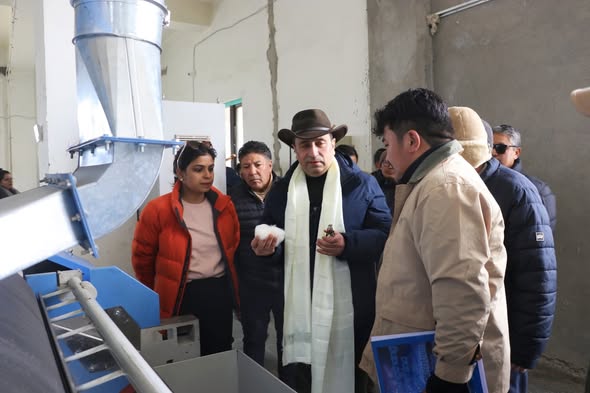
Leh, Ladakh: Chief Secretary, Union Territory of Ladakh, Sh. Ashish Kundra, IAS, on Tuesday conducted an extensive inspection of key infrastructure and livelihood-support projects in Leh, underscoring the administration’s focus on sustainable development, environmental protection, and promotion of traditional industries.
During his visit to the Pashmina Dehairing Plant in Leh, the Chief Secretary reviewed the operational status of the facility, which plays a vital role in strengthening the pashmina value chain in Ladakh. Officials briefed him on the dehairing process, production capacity, quality control mechanisms, and the impact of the plant on local pashmina goat herders and artisans. Sh. Ashish Kundra emphasized the need to ensure maximum utilization of the facility, adoption of modern technology, and strict adherence to quality standards to enhance the global competitiveness of Ladakh’s pashmina products. He also stressed the importance of linking the plant with cooperatives and local producers to ensure direct economic benefits reach pastoral communities.
Subsequently, the Chief Secretary visited the Sewage Treatment Plant (STP) at Agling, where he assessed the treatment capacity, operational efficiency, and environmental compliance of the facility. The inspection focused on the plant’s role in managing urban wastewater and preventing pollution of local water bodies. Sh. Kundra directed concerned departments to maintain uninterrupted operations, ensure regular monitoring, and adopt best practices for wastewater management, particularly in view of the fragile Himalayan ecosystem and increasing urban pressures in Leh.
Accompanied by Secretaries to the UT Administration and senior officers of the District Administration, Leh, the Chief Secretary held on-the-spot interactions with officials, issuing instructions to address gaps and improve coordination among departments. He reiterated that infrastructure development in Ladakh must balance economic growth with environmental sustainability and community welfare.
The visit reflects the UT Administration’s continued commitment to strengthening essential services, promoting traditional livelihoods, and safeguarding Ladakh’s unique ecological and cultural heritage.