
Global Travel Freedom Deeply Unequal as India Slips to 80th Rank
News Desk/ Ishfaq Gowhar :
The ability to cross borders freely is no longer just a matter of travel convenience—it has become a clear indicator of a country’s global standing, diplomatic strength, and international trust. The Henley Passport Index 2026 exposes how uneven this freedom remains, sharply dividing the world between nations whose citizens travel almost unrestricted and those trapped behind layers of visa barriers.
The index ranks 199 passports based on access to 227 global destinations, measuring how many countries can be entered without a prior visa. The results once again confirm that passport power is concentrated in a handful of Asian and European nations, while large parts of South Asia, Africa, and conflict-affected regions remain severely restricted.
At the top of the 2026 rankings is Singapore, whose passport offers visa-free or visa-on-arrival access to 192 destinations, making it the most powerful in the world. Japan follows closely with access to 188 destinations, reinforcing Asia’s dominance in global mobility.
European countries continue to crowd the upper ranks, with South Korea, Denmark, Spain, Sweden, Switzerland, and Luxembourg sharing the third position. The United States ranks 10th, granting access to 179 destinations, a strong position but still behind several Asian and European peers.
For citizens of these countries, international travel is routine—business, education, tourism, and emergencies are handled without bureaucratic delays.
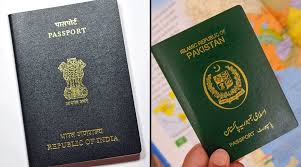
Despite being one of the world’s largest economies and fastest-growing markets, India stands at a lowly 80th position in the 2026 index. Indian passport holders can access only 55 destinations without a prior visa—a number that highlights the gap between India’s economic ambitions and its global mobility reality.
The situation is even more restrictive for India’s neighbours:
• Bangladesh ranks 95th, with access to 37 destinations
• Nepal stands at 96th, with 35 destinations
• Pakistan ranks 98th, offering visa-free access to just 31 destinations
Together, these figures place South Asia among the most travel-restricted regions in the world, despite its massive population, workforce, and diaspora.
The index also reveals striking disparities within the Middle East. Israel ranks a strong 18th, with visa-free access to 165 destinations, reflecting robust diplomatic engagement and international integration.
In contrast, Iran is ranked 92nd, with access to only 40 destinations, affected by sanctions, diplomatic isolation, and regional instability.
At the very bottom lies Afghanistan, ranked 101st, with its citizens able to travel visa-free to just 24 destinations, making it the weakest passport globally. Years of conflict and political uncertainty have virtually shut Afghan citizens out of global mobility.
Henley & Partners note that passport strength is closely tied to diplomatic relations, security perceptions, governance, and reciprocal visa policies. Countries investing in international cooperation and political stability steadily climb the rankings, while those facing conflict, sanctions, or weak global engagement fall further behind.
In a world marked by rising geopolitical tensions, stricter immigration rules, and security concerns, the 2026 rankings send a clear message: mobility is privilege, not a right—and it remains deeply unequal.
As nations compete for influence, investment, and talent, passport power is emerging as a silent but powerful measure of global inequality—one that shapes opportunities long before a traveller ever reaches the airport.