
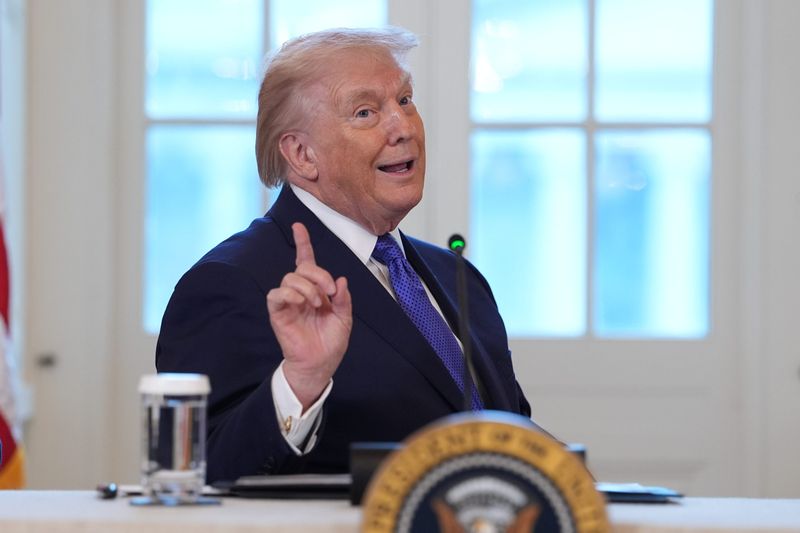
US , Jan 13 : US President Donald Trump has announced a 25 percent tariff on any country that continues to do business with Iran, a decision that could have significant implications for several of Tehran’s major trading partners, including India, China and the United Arab Emirates.
In a statement shared on social media, Trump said the tariff would apply immediately to all trade conducted with the United States by countries engaged in business with Iran. He described the order as final and non-negotiable.
Iran’s key trading partners include China, Turkey, India, the UAE, Pakistan and Armenia. The announcement is likely to have an impact on India, which has remained among Iran’s top five trade partners in recent years.
The move comes at a time when the US has already imposed steep tariffs on Indian goods, including penalties linked to India’s purchases of Russian energy. These measures place India among countries facing some of the highest US tariffs globally.
India exports a range of goods to Iran, including rice, tea, sugar, pharmaceuticals, electrical machinery, manmade fibres and artificial jewellery. Imports from Iran include dry fruits, chemicals and glassware. In 2023, India’s exports to Iran were valued at over one billion dollars, while imports stood at a similar level. Rice accounted for the largest share of Indian exports, followed by soybean meal and bananas. Chemical products formed a major portion of India’s imports from Iran.
India and Iran share long-standing historical and civilisational ties, with relations in the modern era shaped by regular high-level exchanges, trade, connectivity projects and strong people-to-people links.
One of the most important pillars of bilateral cooperation is the development of the Chabahar port in Iran’s Sistan-Balochistan province. The project is aimed at strengthening regional connectivity and trade. India and Iran signed a memorandum of understanding on the port’s development in 2015, followed by a trilateral agreement with Afghanistan in 2016 to establish a transport and transit corridor.
An Indian government-backed company took over port operations in 2018, and in May 2024, a ten-year agreement was signed with Iranian authorities to equip and operate the Shahid Beheshti Terminal at Chabahar. The future of such cooperation could face challenges if the new US tariff policy is enforced strictly.


